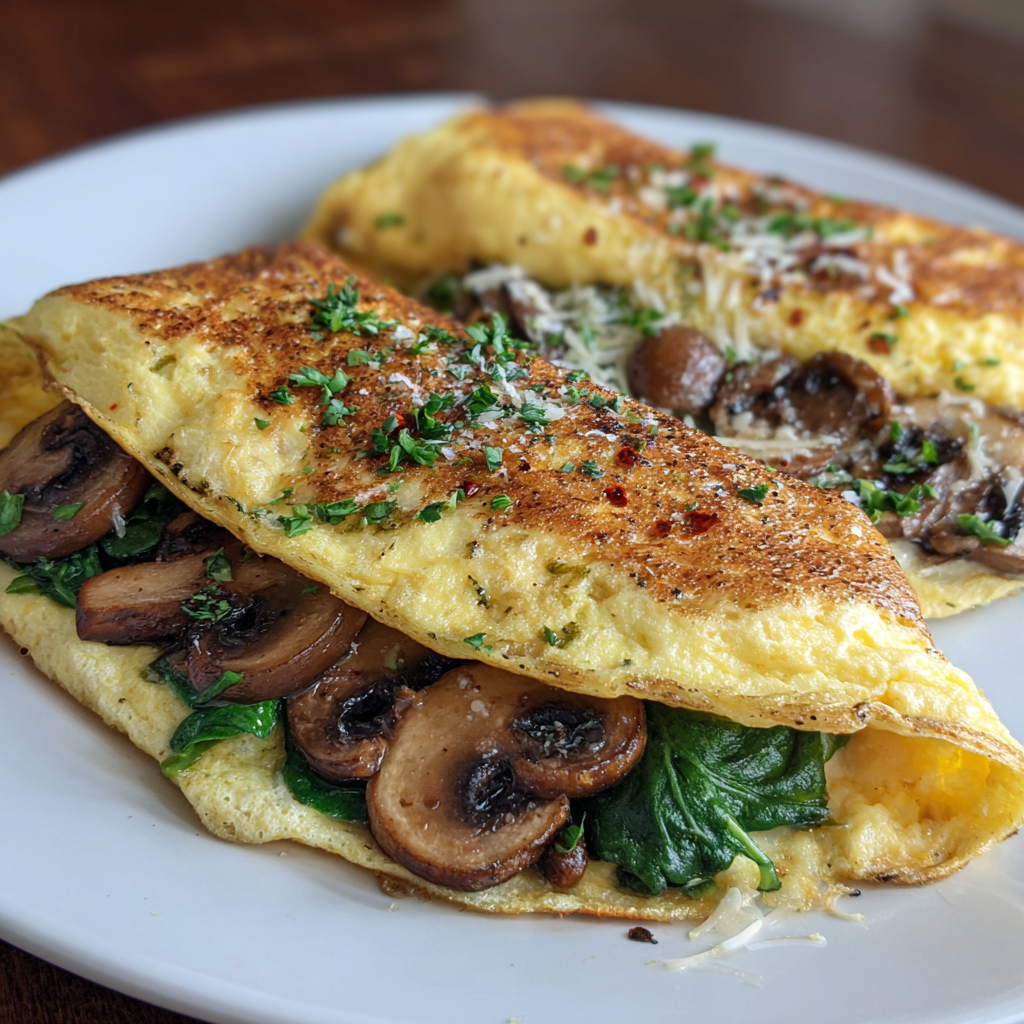
Mushroom and Spinach Stuffed Omelette delivers 28 grams of protein in under 20 minutes with one pan and zero complicated technique. Golden sautéed mushrooms, wilted spinach, and melted Gouda fold into a fluffy three-egg omelette that tastes like a restaurant breakfast and costs a fraction of the price.
Why This Recipe Matters
Most breakfast options either take too long or fall short on protein. This omelette solves both problems — three eggs, a protein-rich cheese filling, and nutrient-dense vegetables come together in under 20 minutes.
Eggs are one of the most complete protein sources available. Three large eggs deliver 18 grams of complete protein alongside choline, B12, and fat-soluble vitamins D and K2.
Cremini mushrooms add more than flavor here. They contribute B vitamins, selenium, and potassium — nutrients that support energy metabolism and immune function — at almost zero calories.
Baby spinach wilts into the filling and contributes iron, folate, and vitamin K. Two cups of raw spinach shrink to a fraction of that volume in the pan, making it easy to eat meaningful amounts without any effort.
Gouda brings fat, calcium, and an additional 7 grams of protein per half cup. That melted layer inside the fold creates the creamy, indulgent texture that makes this omelette genuinely satisfying rather than just nutritionally adequate.
Ingredient List
Omelette
- 3 large eggs
- ¼ tsp fine kosher salt
- ¼ tsp black pepper
Filling
- 2 tbsp unsalted butter (divided), or olive oil
- 4 large cremini mushrooms, sliced
- ½ tsp Italian herbs
- Salt and black pepper to taste
- 1½ cups baby spinach
- ½ cup shredded Gouda cheese (or cheddar or mozzarella)
- ¼ tsp red pepper flakes
Essential Tools and Equipment
- 10-inch non-stick skillet with lid
- Small mixing bowl
- Whisk or fork
- Rubber spatula
- Plate for resting the filling
- Serving plate
- Microplane or box grater (if shredding cheese fresh)
Step-by-Step Instructions for Mushroom and Spinach Stuffed Omelette
Step 1: Whisk the Eggs
Crack the three eggs into a bowl and season with salt and black pepper. Whisk vigorously for 30–45 seconds until the yolks and whites fully combine and the mixture looks slightly frothy. That aeration creates a lighter, more tender omelette. Set the bowl aside within reach of the stove.
Step 2: Sauté the Mushrooms Until Golden
Heat 1 tablespoon of butter in a 10-inch non-stick skillet over medium heat. Add the sliced cremini mushrooms in a single layer and cook undisturbed for 3 minutes before stirring. Cook for another 2–3 minutes until golden brown and tender on both sides.
Step 3: Season and Wilt the Spinach
Season the mushrooms with Italian herbs, salt, and black pepper and stir well. Turn off the heat and immediately add the baby spinach to the pan. Toss with a spatula until the spinach wilts completely into the mushrooms about 60 seconds from residual heat. Transfer the filling to a plate and wipe the skillet clean with a paper towel.
Step 4: Cook the Egg Base
Return the skillet to medium-low heat and add the remaining tablespoon of butter. Let it melt and foam before pouring in the whisked eggs. Tilt the pan to spread the eggs evenly across the surface. Cook undisturbed for 60–90 seconds until the bottom sets and the edges look opaque but the top remains slightly wet and glossy.
Step 5: Set the Top of the Omelette
Carefully flip the omelette with a wide spatula, or place a lid on the pan and cook on medium-low for another 30–45 seconds until the top is nearly set with just a slight shine remaining. The lid method is gentler and better for beginners.
Step 6: Add the Filling
Spoon the mushroom and spinach mixture onto one half of the omelette. Distribute it evenly from edge to center so every bite of the folded half contains filling. Sprinkle the shredded Gouda and red pepper flakes directly over the filling while the omelette is still in the pan.
Step 7: Fold and Melt the Cheese
Fold the empty half of the omelette over the filled half using a spatula. Place the lid back on the pan and cook on low heat for about 1 minute until the cheese melts completely and becomes gooey. Do not rush this step, a covered minute on low heat melts the cheese evenly without overcooking the eggs.
Step 8: Plate and Serve Immediately
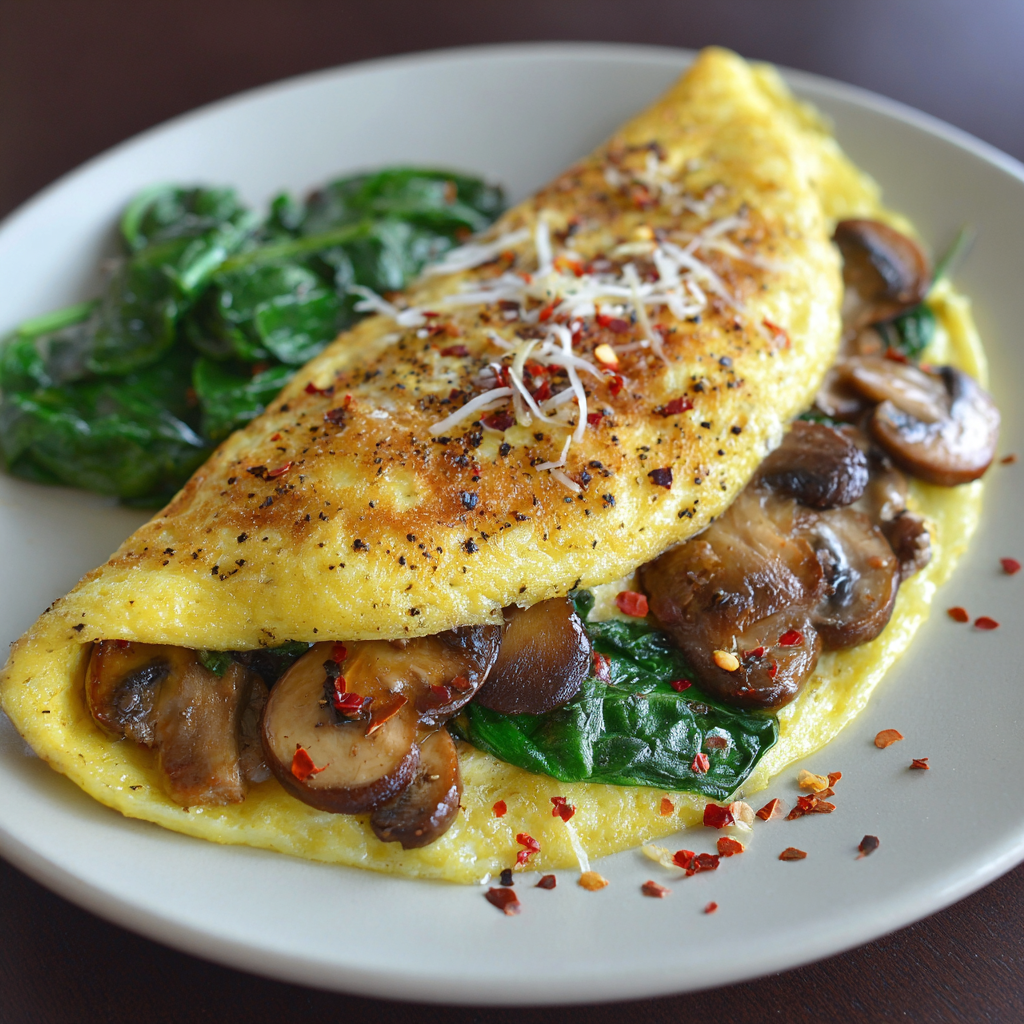
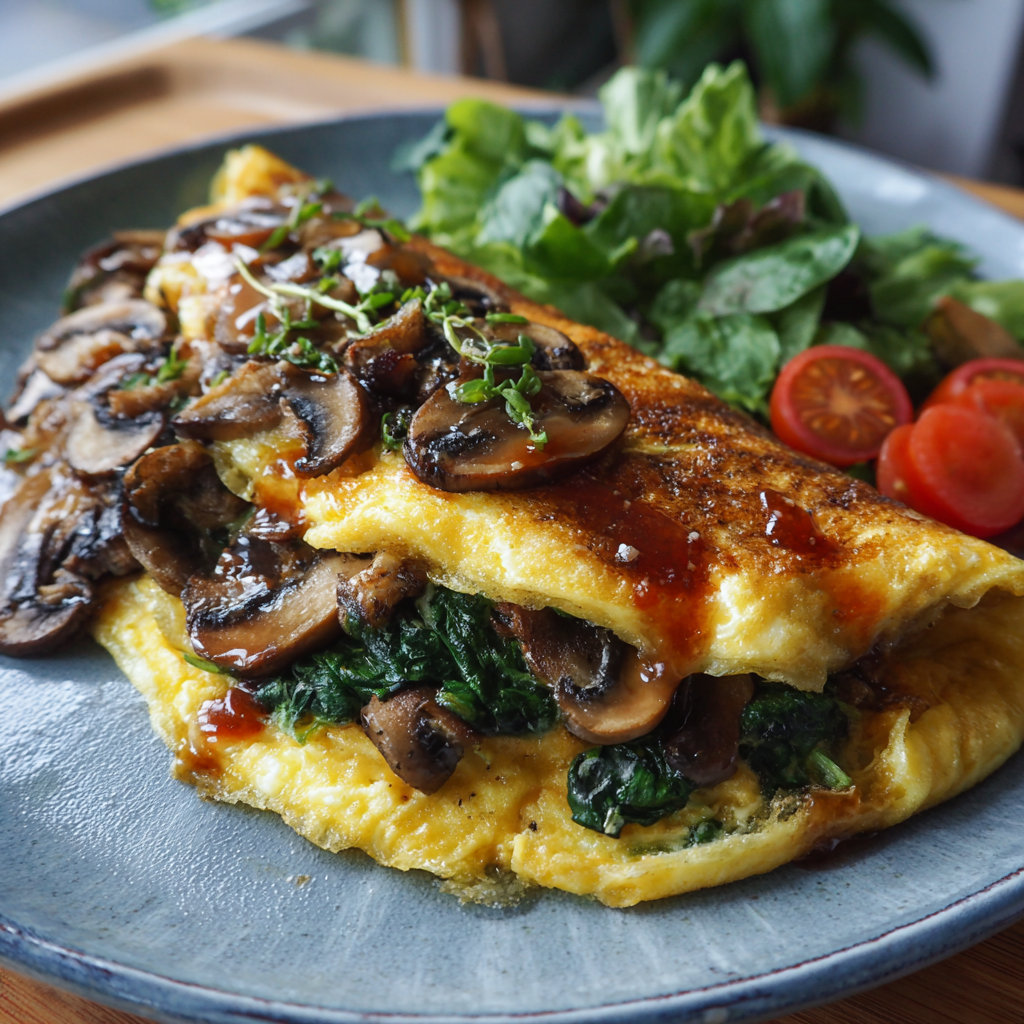
Slide the omelette onto a warm serving plate in one smooth motion. Garnish with extra shredded Gouda, fresh herbs, or cracked black pepper if desired.
Nutritional Benefits
Complete Protein from Eggs and Cheese. Three eggs contribute 18 grams of complete protein and Gouda adds another 7 grams per half cup. Together they push each serving to 28 grams of high-quality protein with all nine essential amino acids present.
Iron and Folate from Spinach. Baby spinach is one of the most iron-dense leafy greens available. One and a half cups contributes meaningful amounts of non-heme iron and folate, both critical for red blood cell production and cellular repair.
Selenium and B Vitamins from Mushrooms. Cremini mushrooms are among the few non-animal sources of selenium, a mineral that supports thyroid function and antioxidant defense. They also supply riboflavin (B2) and niacin (B3) for sustained energy metabolism.
Choline for Brain Function. Three egg yolks supply approximately 420mg of choline — close to the full daily recommended intake for adults. Choline supports memory, focus, and liver health, making this omelette one of the most brain-supportive breakfast options available.
Chef Tips for Perfect Results
- Use a 10-inch non-stick pan exclusively. Stainless steel or cast iron sticks badly with eggs at low heat. A quality non-stick pan is the single most important factor in omelette success — use it every time.
- Cook the eggs on medium-low, never medium-high. High heat makes eggs rubbery and brown on the bottom before the top sets. Medium-low gives you control and produces the soft, custardy texture that defines a good omelette.
- Do not overcrowd the mushrooms. Pile them in and they steam instead of browning. Cook in a single layer and leave them alone for 3 full minutes before stirring — patience produces better flavor.
- Have the filling ready before the eggs hit the pan. Egg cooking happens fast. Prepare and plate the mushroom and spinach filling completely before you pour in the whisked eggs so you are never scrambling.
- Shred the Gouda fresh from a block. Pre-shredded cheese contains anti-caking starch that prevents smooth, even melting. A block grater takes 60 seconds and produces dramatically better results.
- Slightly undercook the omelette before folding. The eggs continue cooking from residual heat after folding. Pull them off just before they look fully done and they will arrive at the perfect texture by the time they reach the plate.
Common Mistakes to Avoid
Cooking the eggs on high heat. High heat browns and toughens the bottom before the top sets. Drop to medium-low and give the eggs the time they need — a good omelette cannot be rushed.
Stirring the mushrooms immediately. Moving mushrooms before they brown causes them to release water and steam instead of caramelizing. Leave them undisturbed for a full 3 minutes and the flavor difference is significant.
Using wet spinach. Spinach rinsed and added straight from the colander brings water into the filling that makes the omelette soggy. Pat the spinach dry with paper towels before adding it to the pan.
Overfilling the omelette. Too much filling makes a clean fold impossible and causes the eggs to tear. Stick to the quantities in the recipe and distribute the filling only on one half of the omelette surface.
Skipping the lid when melting the cheese. An uncovered pan loses heat too fast for the cheese to melt fully before the eggs overcook. One covered minute on low heat melts everything evenly without drying out the eggs.
Flavor Variations & Suggestions
Sun-Dried Tomato and Feta. Replace the Gouda with crumbled feta and add 2 tablespoons of chopped oil-packed sun-dried tomatoes to the filling. The salty feta and sweet tomatoes create a Mediterranean flavor profile that pairs well with fresh oregano.
Spicy Chorizo and Pepper Jack. Add 2 tablespoons of cooked crumbled chorizo to the mushroom filling and swap the Gouda for shredded pepper jack. The smoky, spicy filling adds another 5 grams of protein per serving.
Smoked Salmon and Cream Cheese. Skip the mushroom sauté entirely and fill the omelette with 2 ounces of smoked salmon, 1 tablespoon of cream cheese, and fresh dill. This variation pushes the protein count above 32 grams and takes under 15 minutes total.
Truffle and Gruyère. Swap the Gouda for shredded Gruyère and finish the plated omelette with 3–4 drops of truffle oil. The earthy truffle amplifies the mushroom flavor and makes this feel like a fine dining breakfast at home.
Serving Suggestions
Whole Grain Toast and Fresh Fruit. Serve the omelette alongside one slice of whole grain toast and a small bowl of fresh berries. The toast adds complex carbohydrates and fiber that round out the meal’s macro profile cleanly.
Simple Green Salad. A handful of arugula dressed with lemon juice and olive oil alongside the omelette adds crunch, bitterness, and additional folate without adding cooking time. This combination works well as a light lunch too.
Sliced Avocado with Lemon. Two or three slices of avocado on the side add heart-healthy monounsaturated fat and potassium. A squeeze of lemon over both the avocado and the omelette ties the plate together with brightness.
Black Coffee or Green Tea. This omelette is rich and savory enough to stand alone. A plain black coffee or unsweetened green tea alongside provides caffeine and antioxidants without adding calories or competing with the flavor of the filling.
Storage & Reheating
- Refrigerator: Store a cooked omelette in an airtight container for up to 2 days. The texture softens in the fridge but reheats well.
- Freezer: Omelettes do not freeze well — eggs turn rubbery and watery after thawing. Make fresh or prep the filling in advance and store that separately.
- Reheating: Reheat in a covered non-stick pan on low heat for 2–3 minutes, or microwave on 60% power for 45–60 seconds. High power microwaving makes the eggs tough and the cheese greasy.
- Make-ahead filling: Sauté the mushrooms and spinach up to 3 days ahead and refrigerate in an airtight container. The omelette itself always cooks fresh in under 5 minutes once the filling is ready.
Allergy Information
Eggs. Eggs are the primary ingredient and cannot be substituted while keeping this an omelette. For an egg-free version, use a chickpea flour batter — whisk ½ cup of chickpea flour with ½ cup of water, salt, and a pinch of turmeric as a direct substitute.
Dairy. Butter and Gouda both contain dairy. Replace butter with olive oil and swap Gouda for a dairy-free mozzarella-style shred (Violife or Daiya both melt well). The omelette remains rich and satisfying with both swaps in place.
Gluten. This recipe is completely gluten-free as written. No flour, breadcrumbs, or gluten-containing ingredients appear in any component. Verify that your Italian herb blend contains no added flour or fillers if gluten sensitivity is a concern.
Nightshades. Red pepper flakes come from nightshade peppers. Simply omit them for a nightshade-free version — the filling is flavorful enough without them.
Sulfites. Some store-bought Italian herb blends contain sulfite preservatives. Use a fresh homemade blend of dried oregano, basil, and thyme to avoid this entirely.
Frequently Asked Questions
Can I use a different cheese instead of Gouda?
Yes, sharp cheddar, mozzarella, Swiss, or Gruyère all melt well and work in this recipe. Avoid pre-shredded varieties regardless of the type, as the anti-caking starch in all of them prevents smooth melting.
How do I flip the omelette without breaking it?
Use a wide, flexible spatula and make sure the bottom is fully set before attempting the flip. Sliding the spatula under the full width of the omelette in one motion and flipping quickly gives the best result.
Can I add meat to the filling?
Yes, cooked crumbled sausage, diced turkey bacon, or sliced smoked chicken all work well folded into the mushroom and spinach filling. Add the cooked meat directly to the filling before spooning it onto the omelette. This pushes the protein count above 35 grams per serving.
Can I make this ahead for meal prep?
Prepare the mushroom and spinach filling up to 3 days ahead and store it refrigerated. Cook the omelette fresh each morning. It takes under 5 minutes once the filling is ready, and a freshly cooked omelette is always better than a reheated one.
Why does my omelette stick to the pan?
A pan that is not hot enough before the butter goes in is the most common cause. Let the pan warm for 60 seconds on medium-low before adding butter, then let the butter foam fully before pouring in the eggs. A worn-out non-stick coating also causes sticking.
Conclusion
Mushroom and Spinach Stuffed Omelette proves that the best breakfast on your table is also one of the fastest. Twenty minutes, one pan, 28 grams of protein, and a filling so good. Golden mushrooms, wilted spinach, and melted Gouda in every fold —that you will stop skipping breakfast for good.
Print
Mushroom and Spinach Stuffed Omelette
- Total Time: 20 minutes
- Yield: 1 omelette
Description
Mushroom and Spinach Stuffed Omelette delivers 28 grams of protein in under 20 minutes with one pan and zero complicated technique. Golden sautéed mushrooms, wilted spinach, and melted Gouda fold into a fluffy three-egg omelette that tastes like a restaurant breakfast and costs a fraction of the price.
Ingredients
3 large eggs
¼ tsp fine kosher salt
¼ tsp black pepper
2 tbsp unsalted butter, divided (or olive oil)
4 large cremini mushrooms, sliced
½ tsp Italian herbs
Salt and black pepper to taste
1½ cups baby spinach
½ cup shredded Gouda cheese (or cheddar or mozzarella)
¼ tsp red pepper flakes
Instructions
1. Crack the eggs into a bowl and season with salt and black pepper. Whisk vigorously for 30–45 seconds until smooth and slightly frothy.
2. Heat 1 tablespoon of butter in a 10-inch non-stick skillet over medium heat. Add the sliced mushrooms in a single layer and cook undisturbed for 3 minutes, then stir and cook another 2–3 minutes until golden brown and tender.
3. Season the mushrooms with Italian herbs, salt, and black pepper. Turn off the heat and add the baby spinach. Toss until the spinach wilts completely — about 60 seconds from residual heat. Transfer the filling to a plate and wipe the skillet clean.
4. Return the skillet to medium-low heat and add the remaining tablespoon of butter. Let it melt and foam, then pour in the whisked eggs. Tilt the pan to spread evenly and cook undisturbed for 60–90 seconds until the bottom sets and the top remains slightly wet.
5. Cover the pan with a lid and cook on medium-low for 30–45 seconds until the top is nearly set with just a slight shine. Remove from heat immediately.
6. Spoon the mushroom and spinach filling onto one half of the omelette. Sprinkle the shredded Gouda and red pepper flakes evenly over the filling.
7. Fold the empty half over the filled half using a spatula. Cover and cook on low heat for 1 minute until the cheese melts completely.
8. Slide onto a warm serving plate. Garnish with extra cheese, fresh herbs, or cracked black pepper if desired. Serve immediately.
Notes
Use a 10-inch non-stick pan — stainless steel or cast iron sticks badly with eggs at low heat.
Cook the eggs on medium-low, never medium-high. High heat makes eggs rubbery and browns the bottom before the top sets.
Have the filling fully ready before the eggs hit the pan. Egg cooking happens fast and cannot wait.
Do not stir the mushrooms for the first 3 minutes. Moving them too soon causes steaming instead of browning.
Pat the spinach dry before adding it to the pan. Wet spinach releases water that makes the filling soggy.
Shred Gouda fresh from a block. Pre-shredded cheese contains anti-caking starch that prevents smooth melting.
Slightly undercook the omelette before folding — residual heat finishes the eggs perfectly after the fold.
Make-ahead tip: sauté the mushroom and spinach filling up to 3 days ahead and refrigerate. Cook the omelette fresh each morning in under 5 minutes.
- Prep Time: 5 minutes
- Cook Time: 15 minutes
- Category: High Protein Breakfast
- Method: Stovetop
- Cuisine: American