Japanese Bento Box meals provide 32g of protein in 25 minutes using wholesome, garden-fresh ingredients. This portable lunch format delivers balanced nutrition through high-quality proteins and complex carbohydrates. Following this prep method ensures you have a delicious, health-focused meal ready for work or school every single day.
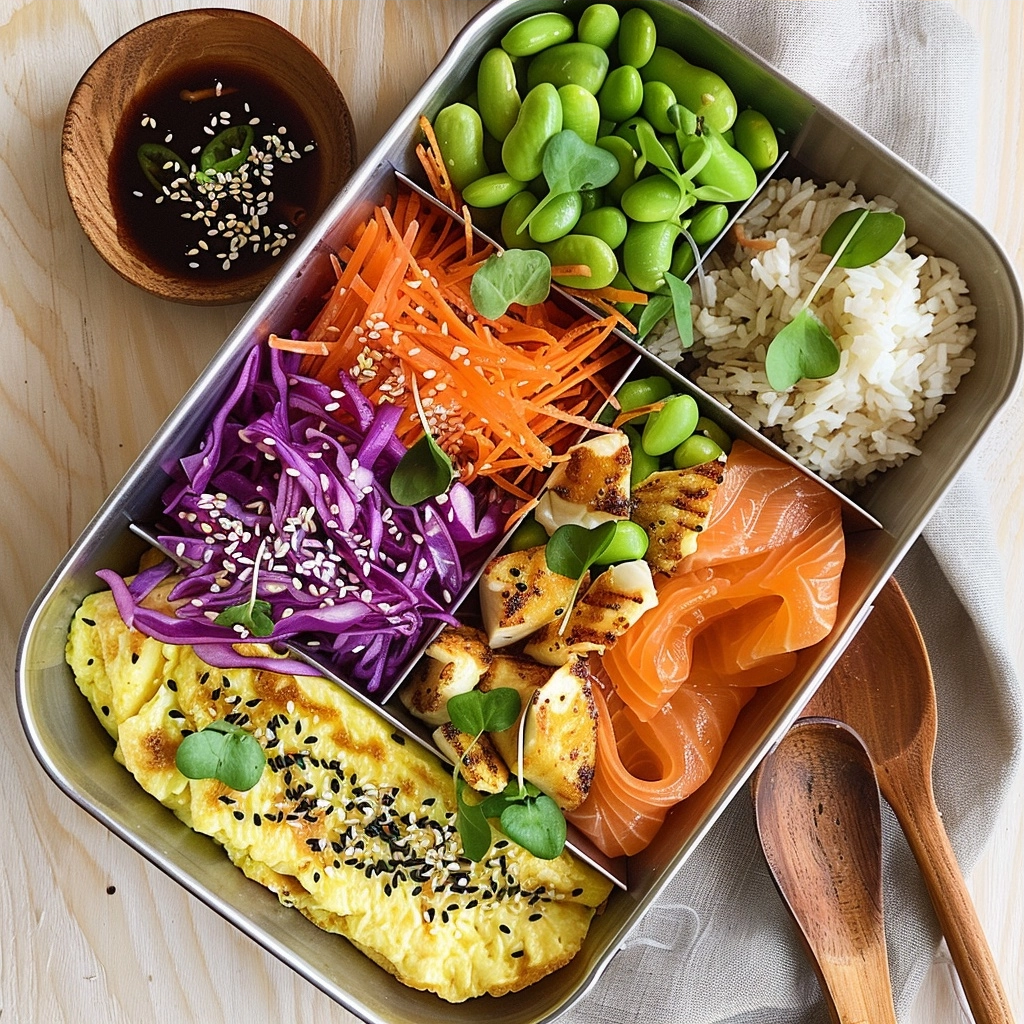
WHY THIS RECIPE MATTERS
This recipe balances essential macronutrients to keep energy levels stable throughout your busy afternoon. Every serving delivers significant lean protein from salmon and edamame, supporting muscle recovery and satiety.
You will appreciate how these deliberate, colorful ingredients prevent the afternoon slump associated with heavy, processed lunches. Incorporating fibrous cabbage and complex brown rice provides sustained fuel rather than a temporary glucose spike.
Ingredient List
| Section | Ingredients |
|---|---|
| Tamagoyaki | 1 large egg, 0.5 tsp soy sauce, 1 tsp mirin, pinch salt, 0.5 tbsp oil |
| Cabbage Salad | 0.5 cup red cabbage, 0.5 cup white cabbage, 1 carrot, 1 tsp sesame seeds, cilantro |
| Salad Dressing | 0.5 tsp miso paste, 0.5 tbsp soy sauce, 0.5 tbsp sesame oil, 0.5 tbsp vinegar, 1 tbsp water, 1 tsp ginger |
| Bento Base | 0.75 cup brown rice, 0.5 cup edamame, 3 oz salmon |
Essential Tools and Equipment
Small nonstick skillet for perfect egg rolling
Sharp chef knife for precision vegetable cutting
Mixing bowls for emulsion of the dressing
Bento container with airtight compartments
Bamboo mat for rolling if desired
STEP-BY-STEP INSTRUCTIONS of Japanese Bento Box
Step 1: Whisk the egg mixture
Combine the egg, soy sauce, mirin, and salt in a small bowl until fully integrated. Use a fork or whisk to ensure the egg whites are completely broken down for a smooth texture.
Step 2: Cook the omelet layers
Heat oil in a nonstick skillet and pour a thin layer of the egg mixture. Roll the egg into a log once set, continuing until the mixture is fully used.
Step 3: Emulsify the dressing
Whisk together miso paste, soy sauce, sesame oil, rice vinegar, water, and ginger in a separate bowl. Ensure the miso is fully dissolved to prevent salty clumps in your salad.
Step 4: Prepare the cabbage salad
Toss the shredded red cabbage, white cabbage, matchstick carrots, cilantro, and sesame seeds with the dressing in a large mixing bowl. Coat the vegetables evenly so every bite carries the robust ginger and sesame flavor.
Step 5: Assemble the bento box
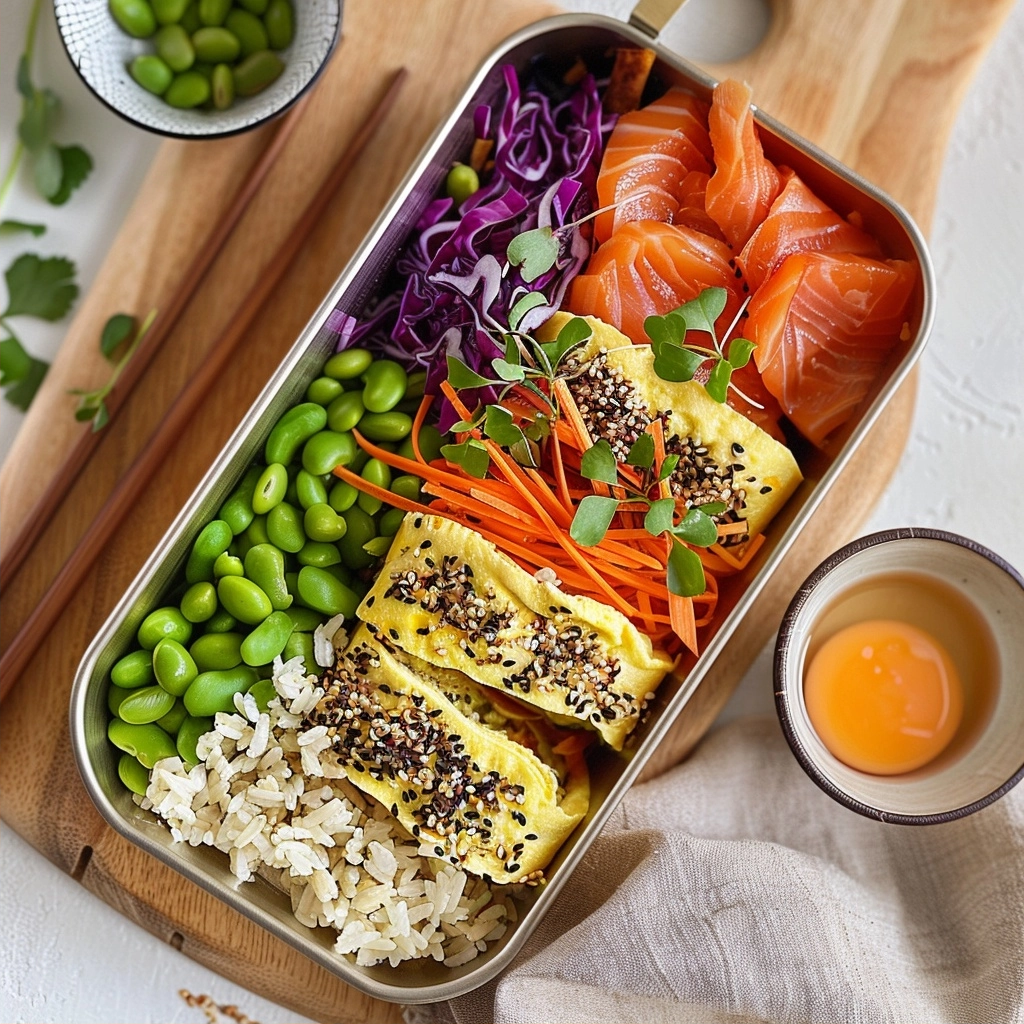
Divide the bento box into sections for your brown rice, cabbage salad, edamame, and salmon. Nestled the sliced omelet pieces into the remaining space to complete the layout.
Nutritional Benefits
The combination of brown rice and edamame provides a complete plant-based protein profile. These complex carbohydrates ensure steady digestion and keep you satisfied for several hours.
Smoked salmon offers high amounts of omega-3 fatty acids essential for cognitive function and heart health. The cabbage salad provides a raw source of vitamin C and fiber for optimal digestion.
Chef Tips for Perfect Results
Use cold salmon to ensure the temperature stays safe for lunchtime service.
Shred the cabbage thinly to allow the dressing to coat every individual fiber.
Cool all your components completely before sealing the bento to prevent soggy textures.
Adjust the ginger quantity based on your preference for warmth and spice levels.
Common Mistakes to Avoid
Adding too much liquid to the dressing will make your salad mushy after thirty minutes. Stick to the provided measured ratios to keep your vegetables crisp and fresh.
Failing to cool the egg before placing it in the box causes unwanted steam and moisture. Always let the omelet rest at room temperature to preserve its structural integrity.
Flavor Variations & Suggestions
Swap the smoked salmon for grilled chicken breast if you prefer a leaner protein source. The ginger dressing pairs perfectly with both options for a consistent, refreshing taste.
Add sliced avocado for extra healthy fats and a creamy contrast to the crunchy cabbage. Ensure you squeeze a bit of lemon juice on the avocado to prevent oxidation.
Serving Suggestions
Pair your meal with a cup of hot green tea to complement the earthy sesame notes in the salad. This combination mimics traditional Japanese lunchtime customs and aids digestion.
Include a small side of pickles like ginger or cucumber for an acidic palate cleanser. These acidic elements balance the savoriness of the salmon and the richness of the egg.
Storage & Reheating
Store your assembled bento box in the refrigerator for up to twenty-four hours to maintain freshness. This recipe is meant to be eaten chilled or at room temperature, requiring no reheating.
Allergy Information
This dish contains soy, which is a major allergen; substitute with coconut aminos for a soy-free alternative. Ensure your miso paste is verified gluten-free if you suffer from wheat sensitivities.
The recipe uses eggs; replace the omelet with seasoned pan-seared tofu for a vegan requirement. Verify that your sushi-grade salmon is processed in a facility that avoids cross-contamination.
Frequently Asked Questions
Can I substitute mirin if I do not have it in my pantry?
Substitute mirin with a mixture of half a teaspoon of rice vinegar and half a teaspoon of brown sugar. This ratio balances acidity and sweetness to mimic the traditional mirin profile.
How do I know the omelet is properly cooked through?
The layers are cooked when the egg is firm to the touch and no liquid remains in the skillet. Press the center gently to verify the internal structure has solidified before removing from heat.
Is it safe to prepare the bento the night before?
Assemble the box the night before and store it in an airtight container in the refrigerator. Ensure components have cooled completely to keep the food texture ideal for the following day.
This Japanese Bento Box offers a streamlined, nutritious approach to daily dining that never sacrifices flavor. With the right balance of lean protein and fresh vegetables, you maintain high performance levels all afternoon. Start prepping your components tonight to simplify your routine and enjoy these clean, bold flavors whenever hunger strikes.
Print
Japanese High-Protein Bento Box
- Total Time: 25
- Yield: 1 bento box
- Diet: High-Protein
Description
This balanced Japanese bento box is designed for optimal afternoon energy, featuring a nutrient-dense combination of salmon, edamame, and brown rice. Packed with 32g of protein, this meal prep solution helps sustain satiety and focus throughout a busy workday. The vibrant cabbage salad, dressed in a zesty ginger-miso vinaigrette, provides high fiber and essential vitamins. This portable, professional-grade lunch is prepared in just 25 minutes using garden-fresh, wholesome ingredients, making it the perfect health-conscious choice for those looking to avoid a post-lunch energy slump.
Ingredients
1 large egg
0.5 tsp soy sauce
1 tsp non-alcoholic rice vinegar (substitute for mirin to keep alcohol free)
1 pinch salt
0.5 tbsp vegetable oil
0.5 cup red cabbage, shredded
0.5 cup white cabbage, shredded
1 carrot, julienned
1 tsp sesame seeds
1 sprig fresh cilantro
0.5 tsp miso paste
0.5 tbsp soy sauce
0.5 tbsp sesame oil
0.5 tbsp rice vinegar
1 tbsp water
1 tsp fresh ginger, grated
0.75 cup brown rice, cooked
0.5 cup edamame, shelled
3 oz salmon fillet
Instructions
Whisk egg, 0.5 tsp soy sauce, 1 tsp non-alcoholic rice vinegar, and salt in a bowl until smooth.
Heat oil in a nonstick skillet and cook the egg mixture into a rolled log while layering.
In a small bowl, whisk together miso paste, soy sauce, sesame oil, vinegar, water, and ginger until emulsified.
Toss the shredded red and white cabbage, carrot, cilantro, and sesame seeds with the dressing in a large bowl.
Assemble the bento box by placing the cooked brown rice, cabbage salad, cooked edamame, pan-seared salmon, and sliced omelet into designated sections.
Notes
Ensure the salmon is cooked to an internal temperature of 145F. Use a bento box with airtight compartments to keep ingredients separated and fresh. The omelet can be made in advance and stored in the refrigerator for up to 2 days.
- Prep Time: 15
- Cook Time: 10
- Category: High Protein Meals
- Method: Pan-searing and mixing
- Cuisine: Japanese